
Honesty is one of the most important qualities we can help our children develop. When kids learn to tell the truth—even when it’s hard—they grow into adults who are trustworthy, confident, and brave. But teaching honesty isn’t just about telling kids not to lie. It’s about creating an environment where telling the truth feels safe and valued!
Here are a three ways parents can help honesty grow in their homes.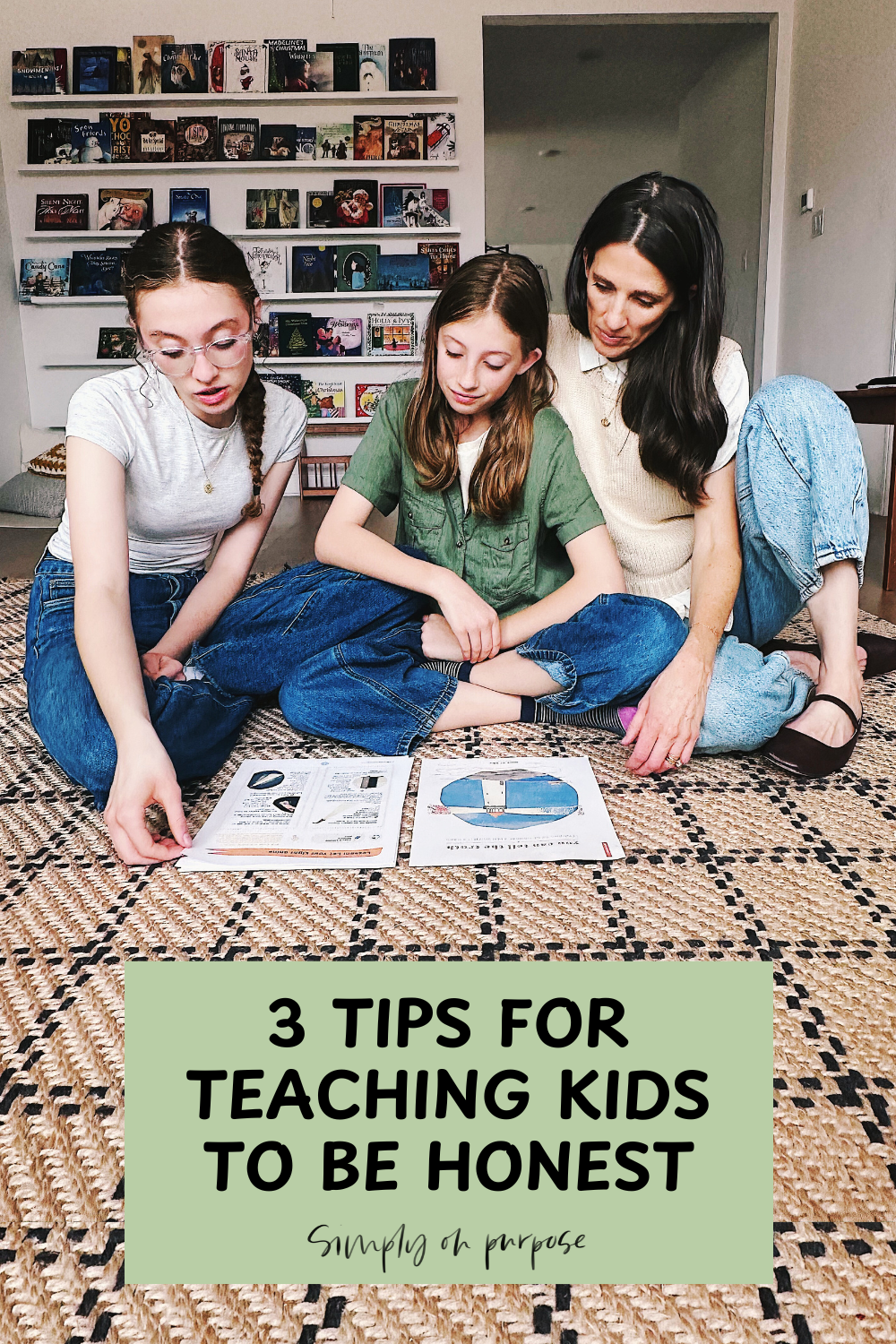
1. Teach Honesty in a Positive Light
Sometimes honesty gets taught with a lot of pressure behind it: “You better tell the truth!” or “Don’t you dare lie to me.” While we understand the intent, this approach can make honesty feel scary instead of good.
Instead, try teaching honesty in a positive way. Let your children know that telling the truth is something to be proud of. When a child admits something difficult, recognize the courage it took.
You might say, “Thank you for telling me the truth. That was brave!”
Even if a mistake was made, the act of being honest is still a good thing. When we highlight that, we help our kids see honesty as something strong and admirable, not something they do only to avoid getting in trouble.
Our world needs more people who are willing to tell the truth, even when it’s uncomfortable! That kind of honesty starts at home.
2. Remember: The Truth Can Be Hard to Hear
As parents, there will be moments when our kids tell us something we really didn’t want to hear.
Maybe they broke something. Maybe they were unkind to a sibling. Maybe they ignored a rule we clearly set.
When we hear those things, it’s easy to react strongly. But if we overreact, our child may start to wonder if honesty is really what we want. If a child gathers the courage to tell the truth and is met with anger or harsh punishment, they may decide it’s safer to hide things next time.
This is the opposite of what we want! This doesn’t mean there shouldn’t be consequences for poor choices. But it does mean we try to separate the two things:
- The behavior that needs to be corrected.
- The honesty that should be encouraged.
When a child tells the truth, we can acknowledge that first: “I’m really glad you told me.”
3. Model Telling the Truth
Modeling honesty shows children that telling the truth is important, even when it feels inconvenient or tempting to bend it. Parents might think they’re justified in little things, like saying their child is 10 instead of 12 to score a free meal, but kids notice more than we realize! Even little white lies from adults can send mixed messages, making it harder for kids to understand why honesty matters in their own choices.
When parents consistently demonstrate truthfulness, children learn that honesty is valued and becomes a natural habit. If we as adults bend the truth in little ways, there will be more room for our children to bend the truth with us.
But when we bring things into the light—talking openly, staying calm, and focusing on learning—children begin to trust that honesty is the right path.
And that trust grows into something powerful!
“You Can Tell the Truth” Honesty Lesson
Teaching your child to be honest takes practice from both you as the parent, and them as the child. This printable resource will help with all the tricky parts of teaching! It’s called, “You Can Tell the Truth: Learning to Be Honest Even When It’s Hard.”
This printable will help your child:
- Learn why telling the truth is important
- Practice making the choice to be honest
- Look for light and truth in others around them
- Seek out friends who are honest with others
When kids learn that telling the truth is always the better choice, even when it’s hard, they carry that lesson with them for the rest of their lives. Download this lesson today!
If you want more resources on teaching your children positive values, check out these resources: