
“We’re going to be late!”
I said this more mornings than I’d like to admit when my kids were little. And I know I’m not alone in this! Most families aren’t struggling with time itself, they’re struggling to teach kids to manage their time before the rushing starts.
Here’s the good news: time management is a skill, just like tying shoes or riding a bike. It’s not something kids are born knowing. It’s something we need to teach them, one small routine at a time!
What Does It Actually Mean to Teach Time Management to Kids?
Kids don’t naturally understand how long five minutes feels, how to break a big task into smaller pieces, or why one thing needs to happen before another. Those things are learned, and they’re learned through repetition, not lectures!
If you want to teach time management to kids in a way that actually sticks, start by making time visible. A simple morning routine on the fridge, a checklist by the backpack hook, a timer on the counter. The goal is to start helping your child to connect tasks with time.
What’s a Priority, Anyway?
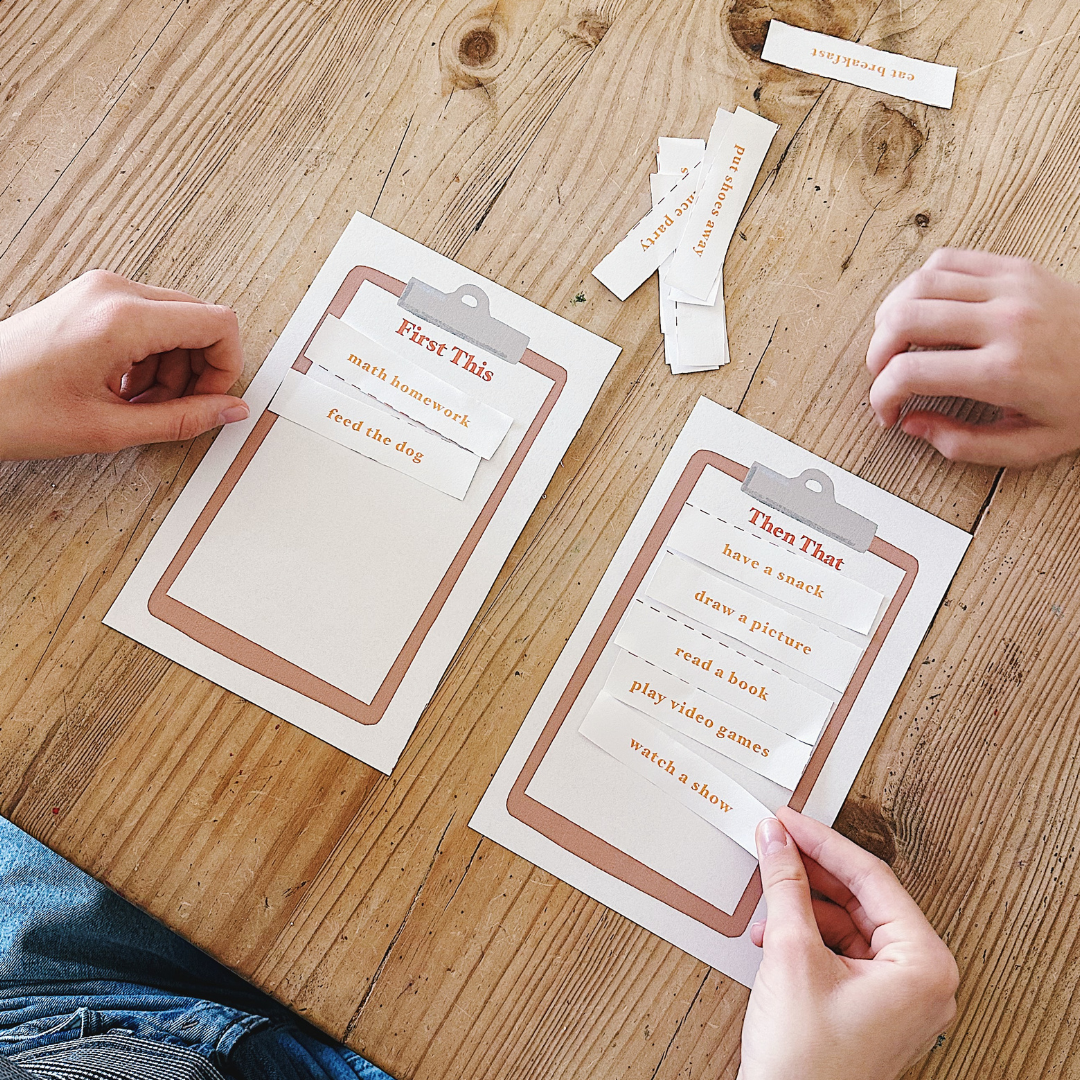
One of the best time management skills for kids is learning to sort what actually needs to happen first.
Here’s how I like to teach kids priorities without turning every evening into a debate. Let’s use the example of what needs to happen after school:
- Name what has to happen. Hang up your backpack, wash your hands, do your homework that’s due tomorrow—these need to come before screen time or play.
- Guess how long it’ll take. Ask, “Do you think that’s a five-minute job or a thirty-minute job?” The guess matters more than being exactly right.
- Let them choose the order. As long as the must-do things get done, let your child decide whether math comes before reading, or chores come before a shower.
This teaches your child what’s a priority without you having to be the one constantly enforcing it. Over time, they start noticing the pattern themselves: how starting early feels better than rushing, and putting things off just makes everything harder later.
Teach Responsibility Through Everyday Chores
If you want to know how to teach kids responsibility, chores are one of the simplest, most effective tools you already have. When a child feeds the pet before school or clears their plate after dinner, they’re practicing something bigger than the task itself. They’re learning that some things need to happen even when they’re not fun.
The key is matching the chore to the child. A task that’s too easy won’t teach anything. A task that’s too hard just creates frustration and tears. Start where your child can succeed with a little coaching, and build from there.
Attach chores to a regular rhythm instead of “sometime today.” “Take out the trash after dinner” removes the guesswork, and the arguing!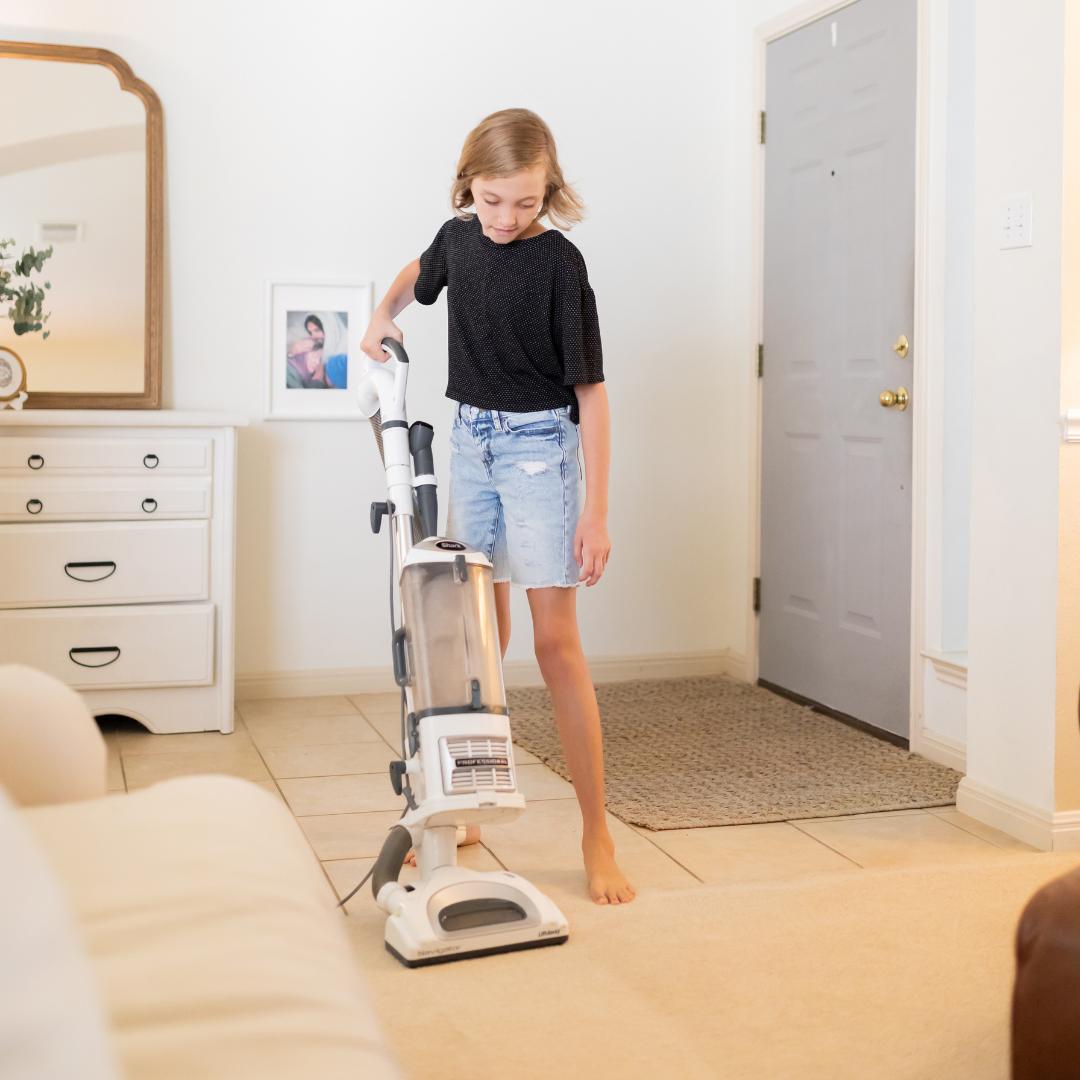
Make Practice Feel Like a Game
Time management doesn’t have to come from chores and homework alone. Some of the best time management activities for kids are the ones that feel like play.
Here are few favorites in our house:
- Beat the timer. Pick a quick task, like putting away shoes or clearing the table, and have your child guess how long it’ll take before starting. Then compare the guess to reality!
- Task card shuffle. Write everyday tasks on cards and have your child sort them into morning, after school, and evening.
- Two-minute tidy. Play a song and see how much gets cleaned up before it ends. Or I’m sure you’ve all heard the song “The Floor is Lava!” This is a great one to help them tidy with an element of fun.
- Plan the perfect Saturday. Hand your child a pretend schedule and let them arrange chores, meals, play, and rest so it all fits.
- After dinner clean-up. This is a ritual we’ve been doing for years. We each have a job after dinner, and we turn on music to get the momentum going so we can make it efficient, and more fun! Adding music is a great hack to making cleaning more fun. (enter your info below to get my “Kitchens Are for Dancing” playlist if you need a starting place!)
These time management games work because they build awareness without a single lecture. Kids start to feel that time can be planned, protected, or wasted. And that lesson sticks a lot better than “hurry up!” ever will.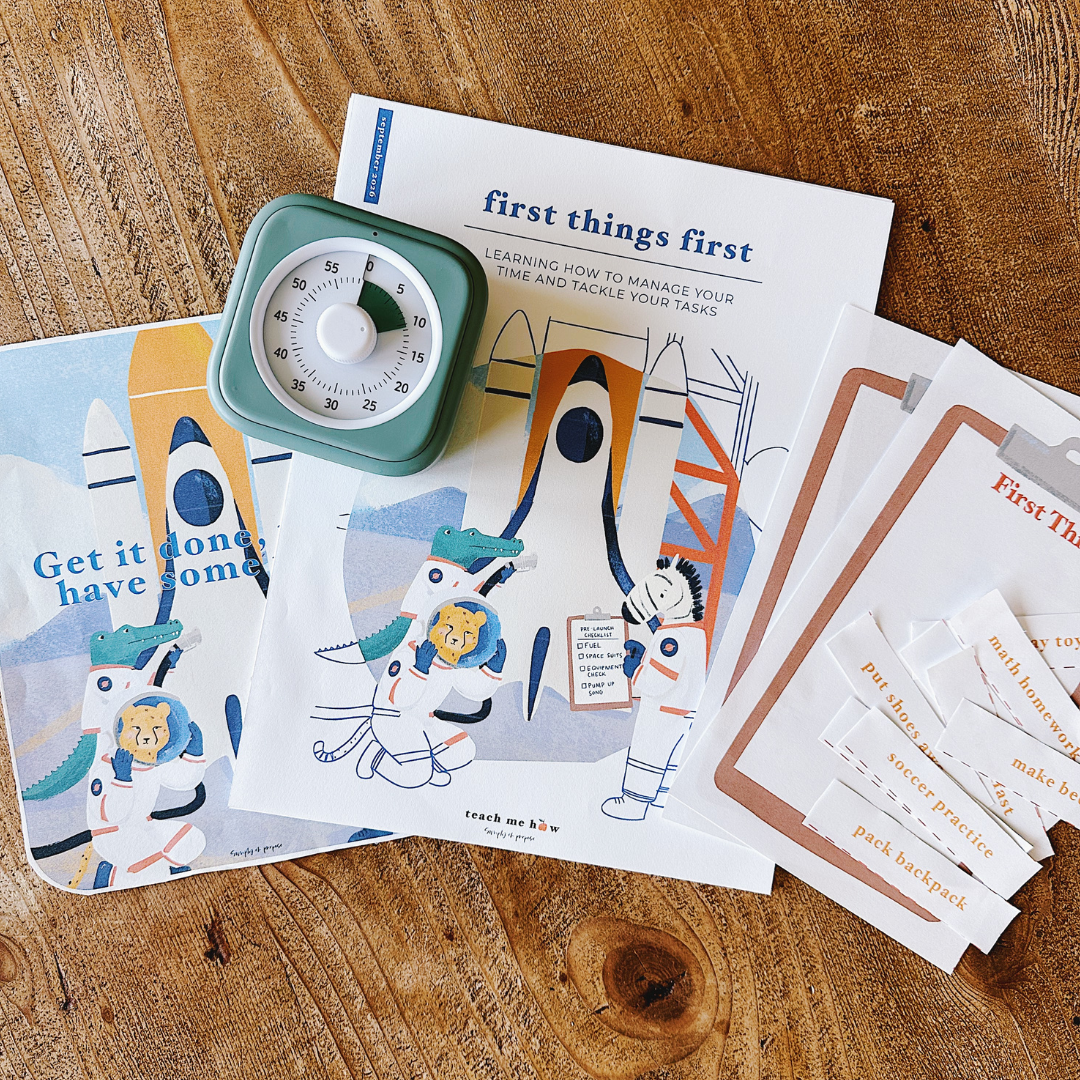
“First Things First” Printable Lesson
If you want a simple tool to bring all of this together, I’ve got exactly what you need. This month’s “Teach Me How” lesson is called, “First Things First: Learning How to Manage Your Time and Tackle Your Tasks,” and it’s a $6 download built to teach your child what should be done first and how to manage their time well.
This lesson will help your child:
- Learn how to decide what needs to happen first
- Practice tackling tasks in an order that actually makes sense
- Build real, lasting time management skills they’ll use for years to come
Download it today, and give your child a simple, practical tool for figuring out what comes first, so mornings (and homework, and everything in between!) start to feel just a little less rushed.
Small Steps for Lasting Change
Teaching kids time management doesn’t mean that you want to turn your child into a robot whose only goal is to be productive. There should be SO much room in childhood for unstructured play! But we do want to help them begin to notice time, plan ahead, and follow through, even if it’s just a little at a time. Pick one routine or one habit to work on this week, and let the rest come with practice. Before long, time management stops feeling like a rule and starts becoming a skill they carry with them for life.
If you want more ideas to teach your kids skills, you might enjoy these resources: