
While I’ve been talking more and more about our switch to homeschooling, I’ve gotten so many questions: “Ralphie, what curriculum are you using?” “What does homeschool even look like at your house?” and “Why the switch to homeschool?”
So today I’m answering it all in one place! If you’re asking “where do I start with homeschool,” this walkthrough will hopefully give you a grounded place to begin.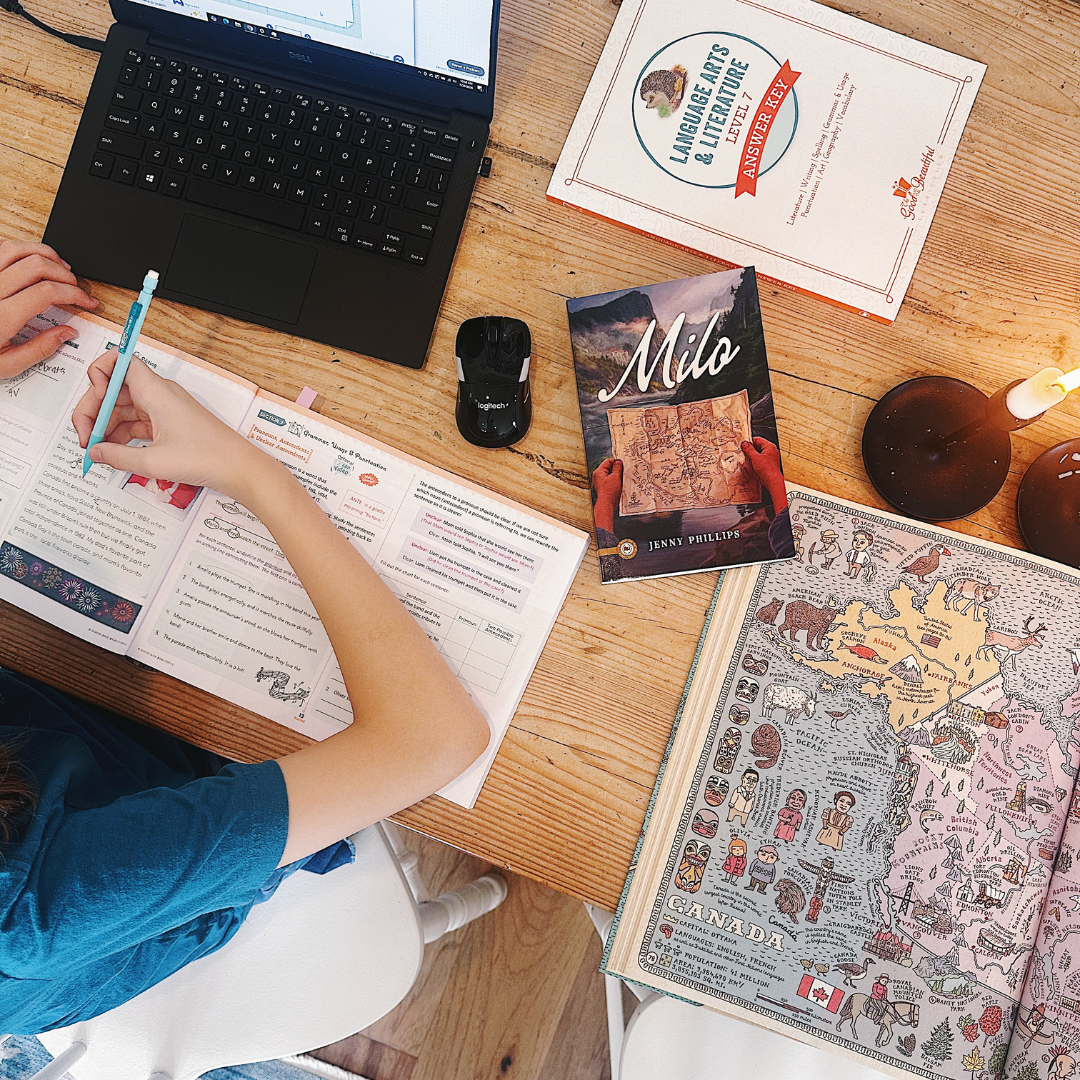
Why We Made the Switch
This wasn’t a decision we made overnight. A few things kept coming up over and over again as we talked it through as a family:
- We wanted more time together. Not rushed mornings and exhausted evenings, but actual hours in the day to be a family.
- We wanted the freedom to travel off-season, when flights are cheaper and places aren’t as crowded, instead of being locked into a school calendar.
- We wanted room to read more and go deep on the things our girls are genuinely curious about, like Greek mythology and theology, instead of skimming the surface of everything.
- And honestly? We were getting really tired of the hour-long commute to their charter school. That was an hour every day we were never getting back!
What Homeschool Looks Like for Us:
If you’re wondering what beginning homeschool looks like, I’ll tell you the truth: it looks different for every single family, because it’s supposed to. Ours looks like two very different plans for two very different girls, built around who they are right now.
Nell (11th Grade): A Homeschool Curriculum for a High Schooler Who’s Ready to Fly
If you’re searching “homeschool curriculum for high schooler,” here’s how we approached it for Nell.
Nell is stepping into 11th grade, and her plan looks a lot less like “school” and a lot more like a “launch pad.” Here’s what school will look like for her:
- She’s taking full-time online college courses through Austin Community College. They’re free, and every one of them earns her college credit. I love this for her.
- She has a great passion for theology so she’s diving into world religions through courses like Holy Envy.
- She’s taking piano lessons and studying music theory alongside it, not just playing songs but understanding why they work.
- Every month I hand-pick a book for her to read, and she gets to choose how she shares what she learned. It could be a conversation she leads over dinner, or it could be a whole project.
- She’s working on real life skills outside of academics. Right now her goal is learning to make macarons and sell them, and let me tell you, our kitchen is excited for that!
- This fall she’ll study for the ACT and start submitting college applications.
- And this is the one that makes my mama heart both proud and nervous: she’s spending a month in Puerto Rico as an au pair for close friends of ours, learning the culture and teaching their children.
If you’re building a homeschool curriculum for a high schooler, I’d encourage you to ask yourself the same question I asked for Nell: what does she need to become who she’s becoming? Not “what does school usually look like?” Hers barely resembles a traditional transcript, and that’s exactly the point.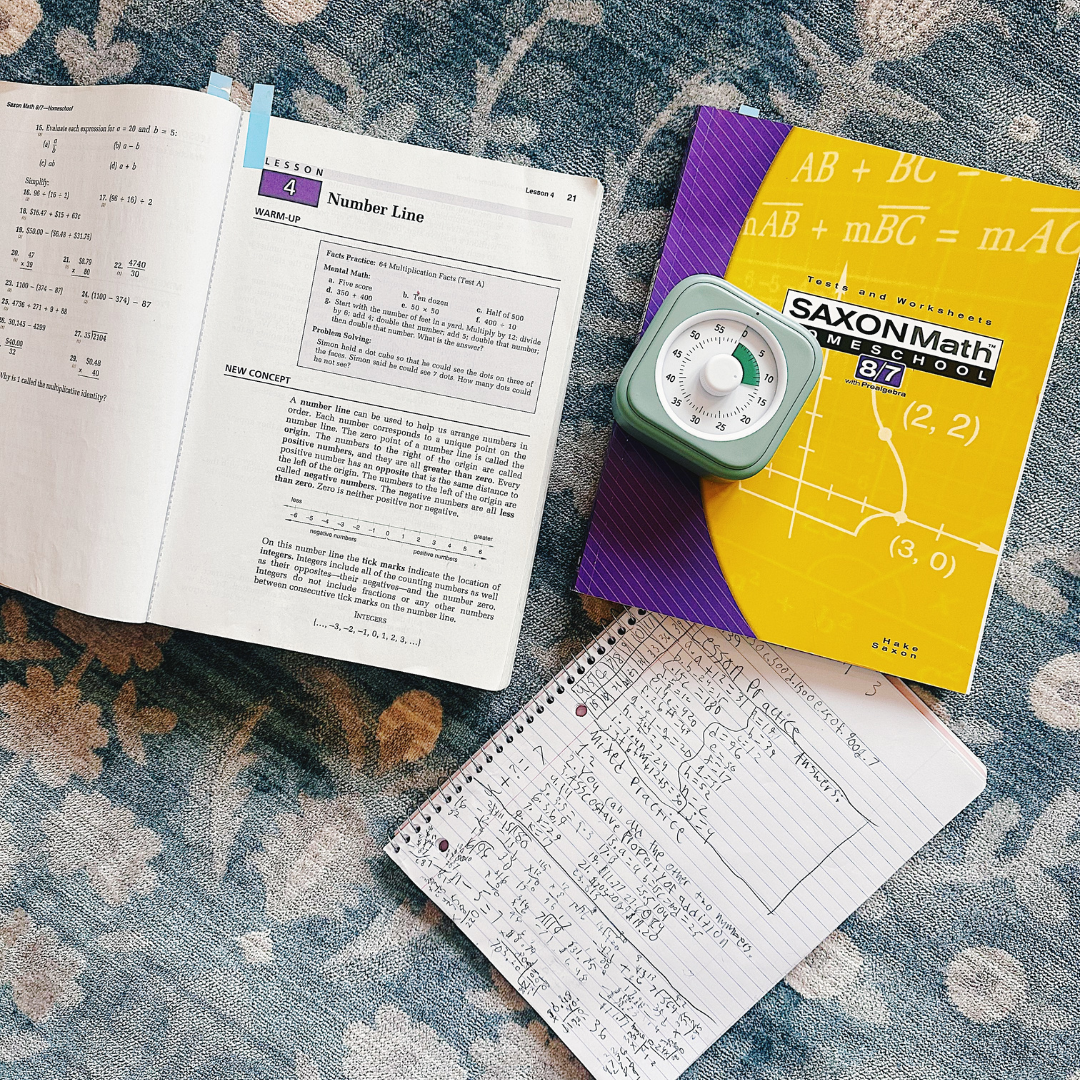
Sybil (7th Grade): A Homeschool Curriculum for a Middle Schooler Who Needs Structure and Wonder
If you’re looking up “homeschool curriculum for middle schooler,” here’s the structured plan that’s working for Sybil.
Sybil is heading into 7th grade, and her days need more structure than her sister’s, which is exactly what we built:
- Math: Saxon Math 8/7
- ELA: The Good and the Beautiful, Level 7
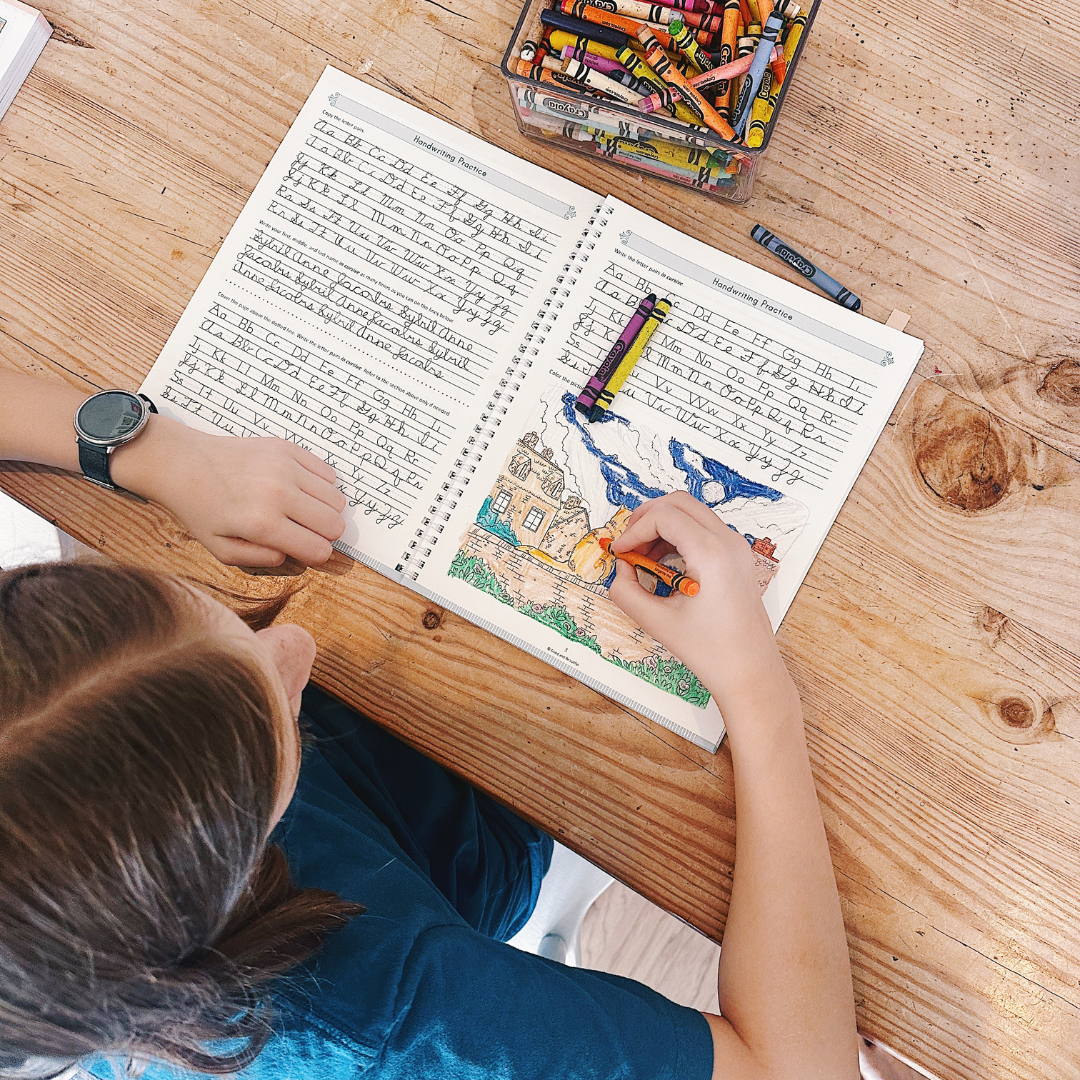
- Handwriting: The Good and the Beautiful, Level 7
- Science: Journey Homeschool Academy’s Astronomy with Brian, which she genuinely begs to do
- Social Studies: a weekly co-op, so she still gets that group learning and connection
If you’re looking for homeschool curriculum ideas that go beyond the core subjects, here’s where we’ve had the most fun. We will be doing read-alouds using these gorgeous read-aloud posters from Ruby Read Books. We’ve also added a stack of supplemental books that we are already loving:
- Greek Myths, reading a chapter and then reenacting the scenes with her toys
- Maps, because a kid who can picture the world understands the world
- Timelines of World History, which has turned history into something she can actually visualize instead of memorize
- Food Anatomy, which has somehow made science and snack time the same activity!

What I Want You to Take From This
If you’re standing at the edge of homeschooling, wondering what it looks like or whether you’re “doing it right,” here’s what I want you to hear: there is no single right homeschool curriculum. There’s only the one that fits the child in front of you. And if you’ve been typing “where do I start with homeschool” into a search bar, I hope seeing two real-life plans offers clarity.
Nell needs room to launch and prepare for college. Sybil needs structure and a way to cater to her curiosity. Both of them needed a mama willing to support them in a way that made sense for who they are, not who a curriculum guide assumes they should be.
So this year I am living, more than ever, one of the Four Principles of Positive Parenting: you are your child’s primary teacher. And teaching them well means meeting them exactly where they are! That’s what homeschool will let us do this year. And we are so excited!
Q&A
Question: Why did you switch to homeschooling?
Short answer: We wanted more meaningful time together, the freedom to travel off-season, room to go deep on our girls’ real interests, and to ditch an exhausting hour-long school commute. Homeschooling lets us build days that fit our family and our kids, instead of squeezing them into a rigid calendar and surface-level learning.
Question: Where do I start with homeschool if my kids are very different from each other?
Short answer: Start with the child in front of you. Ask, “What does this child need to become who they’re becoming?” Build each plan around their current needs, interests, and pace—not a generic template. That’s why our two plans look so different: Nell’s is a launch pad for independence, while Sybil’s is structured to support consistency and wonder.
Question: What does your high schooler’s (Nell’s) homeschool plan include?
Short answer: Nell (11th grade) is:
- Taking full-time online college courses through Austin Community College (free, for college credit).
- Studying world religions (e.g., Holy Envy).
- Doing piano lessons plus music theory.
- Reading a hand-picked book each month and choosing how to share her learning (discussion or project).
- Developing a practical skill (right now: mastering macarons).
- Prepping for the ACT and submitting college applications this fall.
- Spending a month in Puerto Rico as an au pair for close friends.
Question: What does your middle schooler’s (Sybil’s) homeschool plan include?
Short answer: Sybil (7th grade) has a structured core plus joyful extras:
- Math: Saxon Math 8/7
- ELA: The Good and the Beautiful, Level 7
- Handwriting: The Good and the Beautiful, Level 7
- Science: Journey Homeschool Academy’s Astronomy with Brian
- Social Studies: a weekly co-op for group learning and connection
- Enrichment: family read-alouds (Ruby Read Books posters) and supplemental books like Greek Myths, Maps, Timelines of World History, and Food Anatomy.
Question: How does this approach support college readiness and real-world skills?
Short answer: For college, Nell is earning actual college credits, prepping for the ACT, and applying this fall. For real-world growth, both girls pursue interests deeply (from music theory to astronomy), share their learning in authentic ways (projects, discussions), and practice practical skills (like baking). Experiences like Sybil’s co-op and Nell’s au pair month add connection, responsibility, and independence—learning that stretches beyond a traditional transcript.
If you want more resources on being your child’s teacher, check out these resources: