
“You’re dumb!”
“Oh yeah? Well at least I know how to be nice to people. You only know how to be mean!”
Sound familiar? If you have more than one child, I promise you’ve heard some version of this exchange today, yesterday, and probably five minutes ago.
Let’s get into the truth about sibling rivalry: what it actually is, why siblings fighting shows up in every single home with more than one kid, and how to handle sibling rivalry when it does.
The Truth About Sibling Rivalry
Real talk: sibling rivalry is virtually characteristic of ALL children in ALL families where siblings are present. Studies have shown that sibling conflict shows up in homes 10 minutes out of every hour. Let me repeat: TEN minutes in every hour!
The only real way to get rid of sibling rivalry is to get rid of the siblings… And I don’t think that’s what you’re going for.
Here’s the good news—our goal as parents should never be to eliminate the fighting. Sibling rivalry is a normal, expected part of growing up in a family with other kids in it. It shows up as arguing, teasing, competing over attention, the occasional wrestling match over who gets the good spot on the couch. All of it.
It allows our children to learn about reality, the push and pull of relationships, and where other people’s limits are.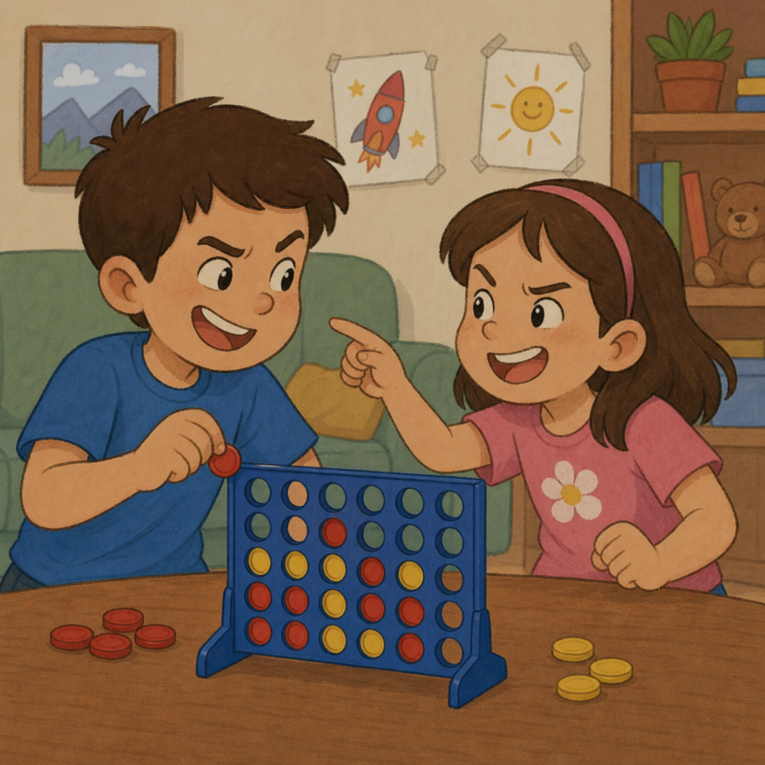
Why Sibling Rivalry Happens
Sibling rivalry usually comes down to a few familiar things:
- Competition for parental time and attention — kids naturally want to know they matter, and a sibling can feel like competition for that
- Personality differences — two kids with very different temperaments don’t always see eye to eye
- Developmental stages — a toddler and a ten-year-old are working with very different tools for expressing frustration
- Family stress or change — moves, new siblings, divorce, and other transitions can change family dynamics
- Perceived favoritism — even when it’s not real, a child’s sense that a sibling gets more can fuel the fire
None of this means you’re doing something wrong. It means you have a normal family!
What Kids Are Actually Learning When They Fight
Here’s where I tend to shock people in my parenting classes: I am an advocate for sibling rivalry.
Because while your kids are arguing over Barbies or who gets the remote, they are learning:
- How to navigate social behavior. How far can she push before it’s no longer socially acceptable? That’s a lesson she can only learn by testing the edges.
- How to bond with a sibling. Arguing is part of the bonding process. I love my brothers, and we fought plenty growing up. (Don’t let a fuzzy memory convince you your childhood was conflict-free!)
- How to resolve conflict. Should she compromise, walk away, redirect, or ignore the instigator? Sibling rivalry gives a child tons of low-stakes practice figuring out which solution fits which situation.
- How to endure when things get hard. They learn to dig in, push through, and not fall apart the moment something is uncomfortable.
- How to forgive and move on. Letting go of being “right” and moving forward is a skill—and kids get to practice it every time an argument runs its course.
So please, don’t be a thief to your children. Don’t steal their chance to learn these skills and bond with a sibling by stepping in the second things get loud. As long as there’s no risk of real harm, walk away. Let them work it out. Tell yourself, “They feel safe, and they are learning.”
When Sibling Rivalry Goes Unaddressed
That said, there’s a difference between everyday sibling squabbling and rivalry that’s gone unchecked for too long. Left unmanaged, ongoing conflict can chip away at a child’s confidence, strain the relationship long-term, and spill over into other parts of life—school, friendships, and their willingness to engage socially.
That’s not a reason to panic. It’s a reason to look for real solutions for sibling rivalry and be intentional about the strategies you’re using at home.
Strategies That Actually Help
If you’re looking for sibling rivalry help that actually works, here’s what I teach families who want to lower the temperature at home—not eliminate conflict, just help it stay productive instead of destructive:
- Set clear, consistent family expectations. Kids do better with predictable boundaries around what is and isn’t okay.
- Model the behavior you want to see. If you want calm conflict resolution, they need to see you do it first.
- Avoid comparisons. “Why can’t you be more like your sister?” plants a seed that grows into resentment.
- Spend one-on-one time with each child. A few minutes of undivided attention regularly does more to prevent jealousy than almost anything else.
- Celebrate each child’s individuality. When kids feel secure in their own strengths, they compete less over who’s “better.”
- Build in teamwork activities for siblings. Shared chores, group projects, and team activities teach siblings to work with each other instead of against each other.
What to Do in the Moment
When the fight is actually happening in front of you, here’s your move:
- Stay calm. Your kids take their emotional cues from you.
- Assess before you react. Is this a normal squabble or something that needs you to step in immediately?
- Let them talk it out. Help each child put words to what they’re feeling instead of jumping in to solve it for them.
- Guide, don’t rescue. Point them toward a solution rather than handing them one—that’s where the real learning happens.
How to Teach Kids Teamwork and Cooperation
Teaching teamwork doesn’t happen by accident. If you’ve been wondering how to teach teamwork to kids in a way that actually sticks, the answer is practice, repetition, and a little intentional guidance from you. Kids can learn to be teammates instead of rivals, the same way they learn anything else!
That is the theme of this month’s “Teach Me How” lesson, “We’re a Team! Learning How to Work Together at Home.” It’s a simple, printable download built to teach your kids:
- How to build a strong family by being a better sibling
- How to be a better teammate, at home and beyond
- What it really means to be loyal to the people in their own family
- How to stand up for each other, instead of tearing each other down
Download it today, and give your kids the tools to see each other as teammates—not competition.
When to Get Extra Support
Most sibling rivalry is healthy and doesn’t need outside help. But if you’ve tried everything and you’re still not sure how to deal with sibling rivalry that includes persistent hostility, a child who consistently feels unsafe or left out, physicality, or conflict that never resolves no matter what you try, that’s a sign it’s worth bringing in a professional. There’s no shame in that! It’s just another way of making sure every child in your home feels safe.
Sibling Rivalry: The Bottom Line
Sibling rivalry isn’t a sign that something’s broken in your family. It’s a sign that you have real, growing relationships happening under your roof. With patience, consistency, and a little perspective, those squabbles today are building the empathy, resilience, and conflict-resolution skills your kids will carry with them for the rest of their lives.
Remember this when they fight: They feel safe. And they are learning!
If you want more help with sibling rivalry, you’ll love these resources: